Designing Just Futures
Health Justice Framework Resource
CORE: Community Health AI Check
Our Writing on Health AI
Dr. Oni Blackstock writes about who should decide how AI is used in health care and public health, and how communities can lead those decisions.


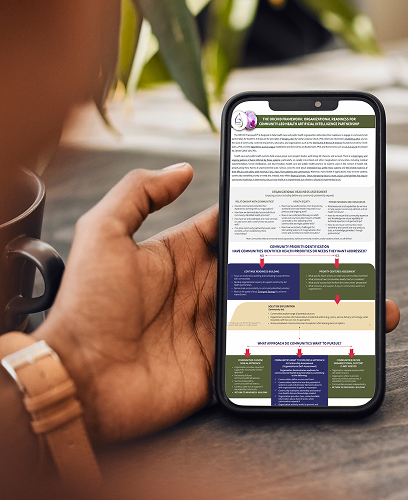
The ORCHID Framework: Organizational Readiness for Community-Led Health Artificial Intelligence Partnership
Most health care and public health organizations begin by asking: “What AI solution can we build/buy?”.
Health Justice encourages organizations to ask a different question: “Are we ready to commit to community-led partnerships around health AI?”


Try out our organizational readiness framework if you’re:
- Considering AI for a health or health care-related issue
- Facing pressure to adopt health AI quickly
- Responding to funding that requires community engagement and health AI
- Responding to a community requests for support with health AI
- (Re)Building organizational trustworthiness with communities
C RE: Community Health AI Check
Four questions to evaluate any health AI tool
Health “artificial intelligence” (health AI) can be an app on your phone or a computer program your clinic, hospital or health plan uses behind the scenes. Ask these four questions about any of them.
Ask one of these questions wherever AI touches your health.

What’s next
We will build on this work through participatory design projects rooted in community knowledge, and by bringing practitioners, researchers and community leaders together to develop shared approaches. Whether we’re helping health leaders evaluate new technologies or building practical tools, our goal is a future of health that starts with communities.